Kham and Amdo Overland Tour

  • Xining
  • 0 booked
  • Duration: 16 Days
  • Language: English

Overview

The heartlands of Kham destination boast snow-capped mountains, pristine forests, vast grasslands, and ancient Tibetan warrior tribes. This journey takes you to remote monasteries, vibrant flower-filled fields, and turquoise lakes. Visit a distant Khampa town, home to a massive stone carving of Buddhist prayers that draws pilgrims from across the plateau. Experience local markets, traditional scripture printing at a parkhang, and savor authentic Tibetan cuisine in the fortress-like homes of the Gyarong people.

Our journey explores the cultural and natural gems of Amdo-Kham in Qinghai and Sichuan. Starting in Qinghai Province, we visit Amdo’s cultural center and Kumbum Monastery, a key Gelugpa monastery known as the “Tibetan Academy of the World.” We then travel along the Yellow River, encountering the Ngolok Tibetans and paying homage to Amnye Machen, a sacred mountain range teeming with wildlife. In Yushu, the heart of Kham in Qinghai, we experience the Yushu Horse Racing Festival (July 25), the largest folk festival in the region. Continuing north, we follow the Ancient Tea Horse Road into Sichuan.

The landscapes of Kham and Amdo feature towering 6,000m peaks, deep river gorges, and vast plateaus. Nomads and farmers inhabit this rugged terrain, where golden-roofed monasteries, castle-like homes, mani stones, and black yak-hair tents dot the wild expanse. Snow-capped peaks rise over alpine meadows, forests, and crystal-clear rivers, creating a stunning yet serene environment.

Tibetan cultural areas are traditionally divided into three regions: Tibet Autonomous Region (TAR), Amdo (Qinghai, southern Gansu, and northwest Sichuan), and Kham (Chamdo in Tibet, Yushu in Qinghai, western Sichuan, and northwest Yunnan). This journey delves into Amdo and Kham in western Sichuan, covering the Aba (Ngawa) Tibetan and Qiang Autonomous Prefecture and Ganzi (Garze) Tibetan Autonomous Prefecture. These lush, biodiverse regions are home to rare wildlife, including pandas, snub-nosed monkeys, and the elusive David’s deer, as well as a wealth of medicinal plants and mineral springs.

Unlike TAR, this area is shaped by the Nyingmapa and Jonangpa sects of Tibetan Buddhism, offering a distinct spiritual experience. Adventures In Tibet invite you to explore the hidden cultural and natural wonders of Amdo and Kham in western Sichuan on this unforgettable journey. Check our Tibet travel guide to explore Tibet seamlessly.


Highlights

  • Qinghai Lake – The largest lake on the Tibetan Plateau
  • Explore Amdo & Kham – The cultural heartlands of eastern Tibet
  • Sacred Amnye Machen Range – Majestic peaks and ancient glaciers
  • Holy Lakes – The serene beauty of Jyarang & Ngorang Lakes
  • World’s Largest Mani Stone Pile – A sacred site of Tibetan devotion
  • Derge Parkhang – A historic Tibetan printing house preserving ancient texts
  • Mountain Meditation Caves – Retreats of Tibetan sages and hermits
  • Dzongsar – A center of traditional Tibetan craftsmanship and Kham culture
  • Ancient Monasteries & Pristine Landscapes – Virgin forests, snow-capped peaks, and hidden sanctuaries
  • Gyarong Tibetan Villages – Traditional stone houses and towering fortresses


What’s Included

  • Transportation (Tour guide is same as driver)
  • Meal (Breakfasts)
  • Pick-up & drop-off
  • Accommodations (Hotels & Home-stays)
  • Entrance fee
  • Expenses of driver and tour guide


What’s Excluded

  • Travel insurance
  • Train/flight fare
  • Personal expenses
  • Driver and tour guide gratuity

What To Expect

1

Day 1: Arrival in Xining

  • Pick-up from Xining airport/train station and transfer to hotel.
  • Overnight in Xining.
2

Day 2: Xining – Qinghai Lake – Chabcha (210km, 4hrs)

  • Explore vast grasslands and Tibetan nomadic culture.
  • Visit Qinghai Lake, the largest saltwater lake on the Tibetan Plateau.
  • Overnight in Chabcha.
3

Day 3: Chabcha – Amnye Machen – Maduo (470km, 7hrs)

  • Drive through expansive grasslands.
  • Admire the sacred Amnye Machen range and its glaciers.
  • Discover the thousand lakes of Maduo grasslands.
  • Overnight in Maduo.
4

Day 4: Maduo – Tso Jyarang & Ngorang Lakes (200km, 4hrs)

  • Spot wildlife (wild donkeys, yaks, wolves).
  • Visit the sacred lakes of Tso Jyarang & Ngorang.
  • Explore a small Tibetan monastery and an ancient stupa.
  • Overnight in Maduo.
5

Day 5: Maduo – Jyekundo (Yushu) (340km, 6hrs)

  • Traverse high passes and vast grasslands.
  • Visit Shuwu town and its monasteries.
  • See the great rivers and holy mountains of the region.
  • Overnight in Yushu.
6

Day 6: Jyekundo (Yushu)

  • Explore the world’s largest Mani stone piles.
  • Experience Kham Tibetan culture.
  • Visit Nambar Nangzan Temple (7th century) with its colorful prayer flags.
  • Discover Jyekundo Monastery and its surroundings.
  • Overnight in Yushu.
7

Day 7: Jyekundo – Sershul (130km, 3hrs)

  • Journey through Zachuka’s nomadic grasslands.
  • Visit Sershul Monastery, home to hundreds of monks.
  • See the world’s longest Mani stone wall.
  • Overnight in Sershul.
8

Day 8: Sershul – Dzogchen Monastery (170km, 4hrs)

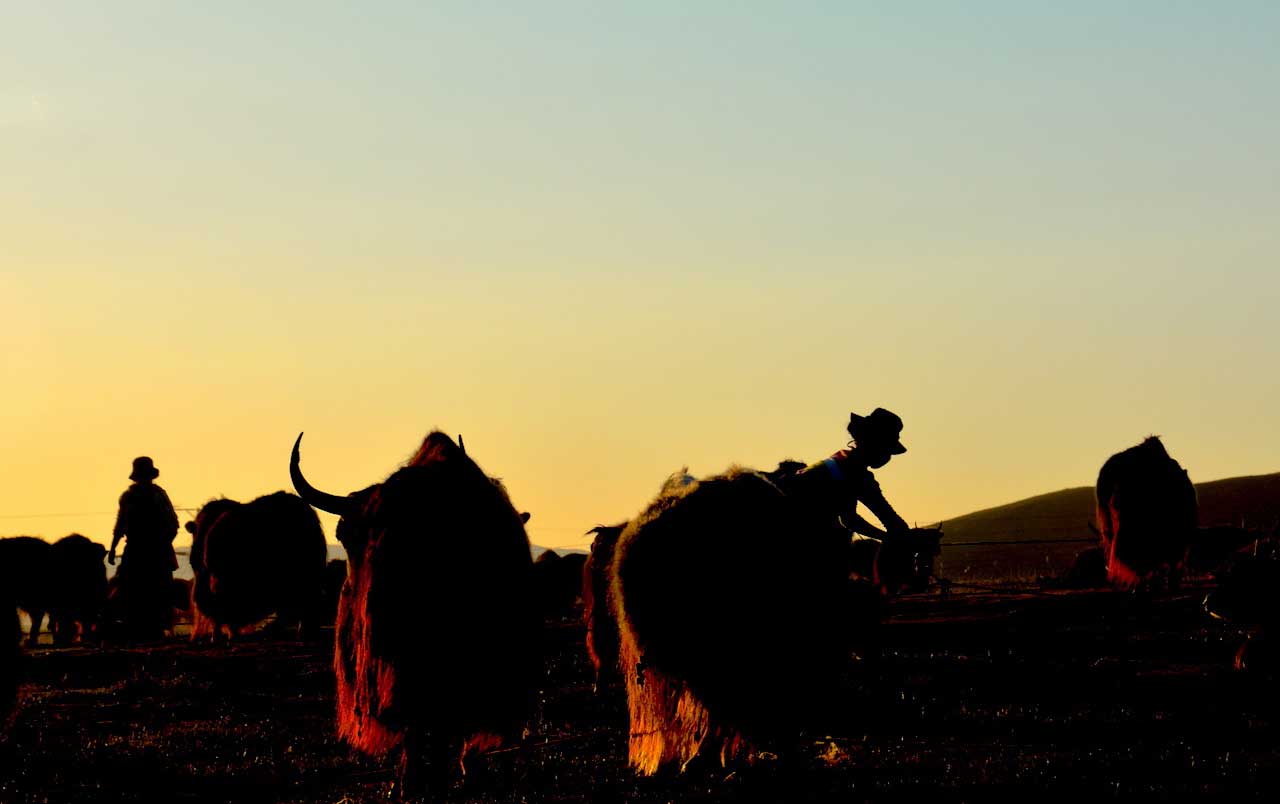
  • Explore nomadic grasslands dotted with yaks.
  • Visit Dzogchen Monastery, set against snow-capped peaks.
  • Discover meditation caves, glaciers, and sacred lakes.
  • Overnight at Dzogchen Monastery.
9

Day 9: Dzogchen Monastery

  • Meet the monastery’s spiritual masters.
  • Hike to Dzogchen Valley and waterfall.
  • Explore meditation caves and sacred lakes.
  • Enjoy breathtaking views of snow-capped mountains and glaciers.
  • Overnight at Dzogchen Monastery.
10

Day 10: Dzogchen – Manigango – Yilhun Lhatso – Derge (220km, 5hrs)

  • Visit Manigango’s nomadic settlements.
  • See Yilhun Lhatso, a holy lake surrounded by towering peaks.
  • Cross Tro-la Pass (5050m) with stunning mountain views.
  • Experience traditional Tibetan villages and Kham culture.
  • Visit Derge Parkhang (printing house), home to thousands of sacred woodblocks.
  • Overnight in Derge.
11

Day 11: Derge – Dzongsar Monastery (120km, 3hrs)

  • Explore Derge Monastery.
  • Visit Palpung Monastery and its meditation caves.
  • Discover Dzongsar Monastery, famous for Tibetan craftsmanship.
  • Overnight at Dzongsar Monastery.
12

Day 12: Dzongsar – Pelyul – Garze (300km, 5hrs)

  • Scenic drive along the Zachu River.
  • Visit Pelyul Monastery, one of Kham’s most important religious centers.
  • Enjoy stunning mountain roads and high passes.
  • Visit Garze Monastery and its vibrant Tibetan market.
  • Explore Tibetan villages and holy lakes.
  • Overnight in Garze.
13

Day 13: Garze – Drago – Danba Zhonglu Village (340km, 6hrs)

  • Drive through breathtaking landscapes.
  • Explore holy Zara Mountain and Tibetan stone houses.
  • Immerse in Gyarong Tibetan culture and admire its iconic towers.
  • Hike through authentic Tibetan villages.
  • Overnight in Zhonglu Village.
14

Day 14: Danba Zhonglu – Day Hike to Sokpo Village

  • Scenic hike to Sokpo Village through deep gorges and lush forests.
  • Visit traditional Tibetan stone houses and fortress-like towers.
  • Overnight in Zhonglu Village.
15

Day 15: Danba Zhonglu – Four Maiden’s Mountains – Chengdu

  • Admire the Four Maiden’s Mountains and scenic high passes.
  • Arrive in Chengdu, the capital of Sichuan Province.
  • End of your Amdo-Kham photography tour.
16

Day 17: Departure from Chengdu

Transfer to the airport for your flight home.

Map

Frequently Asked Questions
  • The best time to visit Amdo and Kham is from May to October when the weather is pleasant, grasslands are lush, and festivals like the Yushu Horse Racing Festival (July) take place. Winter months can be extremely cold and some high-altitude areas may be inaccessible.

  • This tour covers elevations ranging from 2,300m (Chengdu) to over 5,000m (Tro-la Pass, Amnye Machen). Some travelers may experience mild altitude sickness. To acclimate, we recommend:Staying hydrated and avoiding alcohol. Taking it easy on the first few days. Carrying altitude sickness medication if needed.

  • The tour includes a mix of comfortable hotels, Tibetan guesthouses, and monastery stays. While cities like Xining and Chengdu have modern hotels, remote areas offer basic but clean accommodations with limited amenities.

  • You’ll enjoy a mix of Tibetan, Sichuanese, and Chinese cuisine. In cities, you can find a variety of food options, but in remote areas, meals mainly consist of Tibetan staples like yak meat, tsampa (roasted barley flour), butter tea, and simple noodle soups. Vegetarian options are available but may be limited.

  • We provide a comfortable SUV vehicle or a minivan (depending on group size) with an experienced local driver. The tour involves long drives through mountain roads and high passes, but the scenery along the way makes the journey rewarding.

Review

0/5
0 Reviews
5 stars
0
4 stars
0
3 stars
0
2 stars
0
1 star
0

There are no reviews yet.

From

    Fill up the form below to send us an inquiry

    Write a review